
We sat down with Jordie Ho-Shue to chat about growing up in Jamaica, what to drink when you visit, her work, and of course, rum!

S&S: Could you share a bit about some of your favorite memories from living in Jamaica?
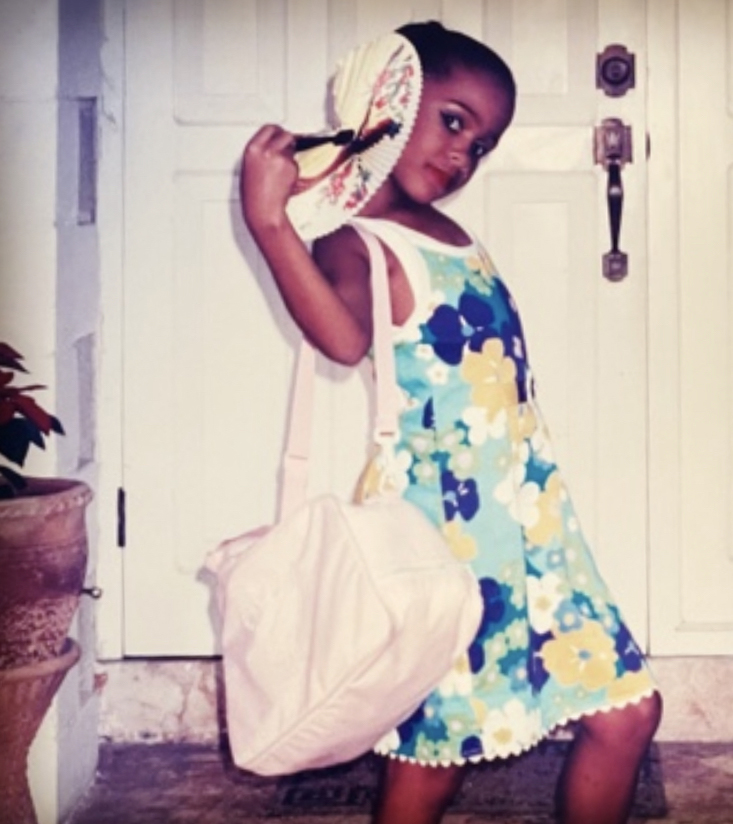
JHS: That’s such a great question. For context, my mom flew to Florida to give birth to me, just like she did with my brother, which is great. We really appreciate that. And after a couple of months, flew me back to Jamaica. So even though I was raised there, I technically was not born there. Being a resident here has been a huge help. I went to undergrad in LA and back to LA for grad school. But before that, my formative years were all in Jamaica.
So when you say my favorite memories, it’s very interesting, because I’m thinking about almost the stages of growth. But I would say some of my favorites are definitely around school. In Jamaica, you start high school at eleven and it goes through until you’re about sixteen. And then you can do two years of upper high school, which is the equivalent of your first year of college. So you can either go directly to college, or you can spend two years in upper high school. And then after those two years, you can go into your second year of college. So it’s a weird system.
I went to a school called Immaculate Conception High School. It was an all-girls’ Catholic school, and we had the craziest uniforms. Imagine the longest pleated skirts you’ve ever seen in your life. And even though it was kind of a weird time for a lot of reasons, and especially with that age difference—you have kids who are eleven years old going to school with kids who were 16—I would say that a lot of the rituals around school were great.
We had Sports Day, which was a huge deal every year. It would essentially be your annual Olympics for the school. I would say that, and the fact that we had different local sports affinities—we had something called champs, which is kids running in the National Stadium as early as ten years old. And everybody kind of knows that we’re the fastest runners in the world. That’s partly because of that whole cultural ritual around sports and celebration and stuff like that. So yeah, some of my fondest memories would definitely be a lot of the rituals around school and just getting to know other kids at different schools as well.
I lived in a neighborhood where I could actually go out and just kind of walk freely any time of day and night, which is rare for Jamaica. And I was really fortunate for that reason because Jamaica has a reputation for being kind of dangerous. And even though I think it’s super sensationalized, there is some legitimacy to maybe don’t go out on the streets at night as a kid. And the fact that I was able to do that in my neighborhood was really awesome.
S&S: We’re curious about everything culturally, but we’re particularly curious about the drinking culture. What are the things we have to order at a bar?
JHS: So as corny as it sounds, the Wray & Ting is just what you have to order, you know. And the Ting down there. I’ve taken many friends and many people there. But most recently, I had a friend come through and he was like, wow, the Ting really is just so much better down here. And yeah, it’s great. We really just crush Wray & Nephew. That’s ultimately what everyone’s drink of choice is and it goes really well with Ting. And here’s what you definitely should order and this is just like a testament to when bartenders travel, but I went down with a group of eight people a few years back, and we got together at this famous beach where you order fish, lobster, and all that good stuff, and we invented the Jamericano, which is Wray & Nephew, a splash of Campari, and fill with Ting.
Here’s the beautiful thing I love about Jamaica, you can order little bottles of Wray & Nephew—they call them Qs, and they’re like quarters—and that’s what everybody does. They order little Qs and they make their own drinks. And trust me, it’s all feel. You don’t need to worry about exact measurements.

S&S: So that feels a great segue into our next question. We love showcasing the full range of a spirit here at Shaker & Spoon. It’s so cool having a drink, like the Duppy Conqueror, that really departs from what you usually expect from Jamaican rum—definitely from that beachy vibe that people tend to assign to it. And we’re curious, what drove you through the process? And what inspired you to come at it in that way?
JHS: I think one thing that is so interesting is that Jamaicans don’t really drink cocktails as much as you would expect. When tourists come down, absolutely, there’s a whole avenue dedicated to making sure they get the fruity drinks that they are expecting. But when it comes to local drinking culture, people are drinking white rum and Ting, they might drink Appleton and Coke. A lot of the time, people will just drink rum on the rocks. And this Duppy Conqueror was inspired by the cocktail that I imagined I would make for my dad. And a lot of the men in my family who don’t necessarily want much to do with cocktails. And I think it showcases a little bit more of the reality of how people would typically drink in Jamaica. It’s not a lot of fuss, but very much rum forward, not shying away from the strength of the rum, and just like a slow sipping experience.

S&S: That is definitely what it is, and it’s fantastic. And we do really want to dig into rum. There’s a really fraught history to contend with when celebrating what is now a completely global industry. What are your thoughts on this? Where are we now? And what are the ways in which we could change towards a better, more equitable future?
JHS: I’ll start with the only brand job that I’ve ever really felt was purpose driven for me, was when I worked with Copalli. I felt really good about where they were coming from when it came to wanting to create a lot more parity in the rum industry and for the people working within it. Making sure that they were setting a new standard for working conditions and also making sure that the culture of rum production—that they weren’t resting on those laurels. Because it’s really easy to divert to the ways in which people have always done things and when it comes to rum, that’s rooted in slavery. The way that people have always done things—in that context—isn’t always going to be acceptable by modern standards. It’s really easy to allow the culture to define our current actions; what we tolerate and accept. And realize, oh, this has become normal.
And I say this all the time: a great example is with DJing. Right? It’s kind of crazy that it’s some crazy statistic—like, there’s only 6% women in electronic music—and that’s just such a clear disparity. Why is it that it doesn’t feel as pressing as the numbers are showing that it is? It’s because of what’s normalized. Right? Through our conditioning.
So say we get images of the male DJ, all the way throughout our childhood and into becoming adults. You’re not even going to realize it, but subliminally, you expect a DJ to be a male identifying person. I think that’s similar with a lot of cultural phenomenons, the rum industry being one of them, where we tend to normalize certain things and then it’s calcified in our minds as, oh, well, this is just the way it’s done.
And I think a lot of Caribbean rum brands—operated by Caribbean people—are still very much guilty of upholding a lot of those structures that, by most standards, would be considered unacceptable. And Copalli—the reason why I was attracted to that position is because they were being disruptive in that way.
So that said, it’s really easy to do better. When the expectation is cultural practices rooted in slavery, it’s not that hard to go above and beyond when that’s the baseline that we’re operating from. I think it’s really important to have brands answer for their practices, and make sure to question them. If there’s anything that I want to leave, or impart on this interview, or with this question, it’s to hold brands accountable, and just ask them questions, pull them to the front, and make sure that they’re answering questions truthfully; that those answers sit well with the general public and consumers, and to make decisions based on those answers.
It’s very easy these days to get quality products. There’s so much wonderful product available that now we’re at a point where you’re like, okay, what are the practices? What is the culture? What are the brand values? What are the pillars that you guys are building this company around? and let those be guiding lights into who you want to support.
S&S: That’s right. As the simplicity of making the spirit has become easier through engineering, brands then have to focus more time and energy into the engineering of the story and of the brand itself. And then the other thing is, like you were saying, people should ask questions of brands. And brands—especially those who are true brands, and not distillers, not the producers—those brands should be asking questions, and they should be open about the questions that they’re asking. In some cases, we know they’re doing what we’d call the “right thing.” But a lot of people don’t want to talk about it for one reason or another; because they’re secretive about it in terms of their production, for example. Whatever that reason is, we’d say we agree that brands would be far better suited taking the first step and saying, hey, this is what we’re doing, and why, as opposed to waiting for us to ask.
JHS: Right. And that’s such a great call to action to consumers: to hold their feet to the fire. And the call to action for brands is: don’t put us in a position where we have to. So that’s where I would say, the rubber meets the road.
And I think it’s a great point, about when you’re making sure that your brand is engaging in certain activities that might be considered CSR [corporate social responsibility] driven—like, we have a social responsibility to do these things, we’re going to do these things, and then we’re just going to park it, and then market ourselves in a way that’s completely incongruent with those things. Then it’s like, okay, what are the motivators? What are the drivers behind those do-gooder activities, if you will? And what are the motivators in you, not bringing those to the forefront? So then it starts to delegitimize both the actions and activities that you’re engaging in, that would be considered beneficial and positive contributions. And so it’s almost like, is that genuine? And when your marketing is so engineered, it’s almost trivializing in a way, where it’s like you’re pumping out stuff that you think consumers want to see, rather than stuff that reads as authentic. Then it’s almost like, okay, where’s that coming from, and you almost like, undermine both levers by not really making sure that it’s consistent, that it’s airtight, that everybody understands why you do the things you do and where certain things are coming from and the heart and soul of the brand. Are we rallied around the same mission and values? And that’s kind of the foundation.
And this is a really great segue, and I just want to kind of address it directly and very respectfully, you know, one of the things that I really thought long and hard about is, my participation as someone who identifies very heavily as Jamaican, and for all intents and purposes, is Jamaican. It’s one of those things, where I’m like, okay, the Plantation Rum, this is a great product, and I can completely get behind this distillate 100%. However, when it comes to something that a lot of people don’t . . . it’s hard to put your finger on exactly what their distinction is, with expectations when it comes to EDI, right, like equity, diversity, inclusion.
Now, the whole trend is equity, diversity, inclusion, and belonging, right. People are trying to address different needs that aren’t necessarily encapsulated by saying this is an equity issue, this is a diversity issue, this is an inclusion issue, or this is a sense of belonging issue. I think something that I always kind of use as a North Star is parity and participation, right? And what that really means is, okay, are people able to participate at every level of this process, this organization, this venture, this project? Are people given equal invitation to participate? And something as simple as: Are people given the opportunity to equally participate in the marketing, right, like images that are being pushed out by a brand? Or in the actual operations? And are we in the compensation? Every avenue. Is there a parity of participation? And that’s a concern with not just the brands that we’ve brought up, but in so many brands in different ways.
The one aspect that really stood out for me, that made me feel a lot more at ease, was the concept of access, and access when it comes to Shaker & Spoon, consumers and community, right. I definitely believe in making things accessible and making the work that we do accessible. And I think that’s a huge thing in the craft cocktail world. A lot of times these cocktails and these spaces are unapproachable and inaccessible. Something that is really important to me is being a steward rather than a gatekeeper, and allowing as much access as possible to those who are curious and want to explore craft spaces and creative spaces and cocktail spaces and all of these fun and interesting mediums that we use to bring people in and to connect. And I think the fact that Plantation, and a lot of the brands that we were talking about, is fairly accessible—that’s something that I can get behind and that’s something I can advocate for.
S&S: Really appreciate you addressing that specifically. Explaining all of that was like, we can tell you thought really deeply about this. From your answer, we feel like we can both understand the challenges and also feel like you’ve left us with a toolkit, which is really fantastic.
JHS: Awesome. That’s great to hear. That’s awesome.
S&S: With all of your deep knowledge of the industry and your craft, what was behind your decision to pivot to the live event space? Can you talk about the message at the heart of HoneyFest?
JHS: Absolutely. I’ve had the privilege of being in the craft cocktail scene in San
Francisco since 2013. I think just being immersed in hospitality and nightlife, there’s just a natural relationship with live entertainment. And in the last nine months before coming to LA for the MBA program at UCLA, I just completely immersed myself in learning how to DJ and I was practicing maybe 8, 10, 14 hours a day—which was pretty insane looking back on it, but it was very much like a fish to water type of situation.
Getting really good at bartending took a lot of intention, a lot of dedication, and just diligence. And then with DJing, it was almost like a hidden talent. So I just fell in love with it pretty quickly. And then through the MBA program at UCLA, I was the president of the Women’s Business Connection, and that gave me a platform to curate HoneyFest. That was all about essentially creating space for non–cis white males to showcase their talent and work in an environment that felt just as uplifting and supportive, showcasing work to people who genuinely care about us and having that supportive environment. That’s not always the case in the real industry side of things. It kind of betrays a lot of the sentiments and the heart centeredness that comes with wanting to get involved in that in the first place, culturally, it’s just not like that at all. It’s pretty exclusionary. And so that’s what HoneyFest is meant to address.

S&S: Oh, that sounds amazing. Are you performing as well? And I’m wondering how you’re using your experiences behind the bar and learning the craft of DJing with HoneyFest?
JHS: I would say more so my experience working with Lush Life on curating Brown and Balanced and also just as a brand ambassador are directly correlated. Obviously, it’s really nice to be able to contribute to HoneyFest on one of the most epic beverage programs at any event or festival, but it’s really nice to be able to contribute to any sort of bar program, even for an event concept. And I still love doing that. I think more so the ways in which my background has really supported the evolution of HoneyFest is when it comes to partnerships. Events are a huge channel for really building emotional connection and lasting affinity with an audience and I think, with spirit brands, it’s almost double that. Liquid to lips is such a huge metric, that really understanding what a potential partner is looking for and what’s meaningful to them while curating an event is super helpful.
S&S: Interestingly enough, that’s literally what we do every single month: it’s like we’re running a new event every month because every box has a different theme. And the emotional connection, that’s something that if you’ve ever spent time in the Shaker & Spoon Facebook group, you’ll see how wonderfully warm and sharing people are with each other. And that’s also created community over time through the service.
JHS: Yes, exactly. When I think of Shaker & Spoon, it is exactly like what you said, like you’re curating an event and experience, right? Ultimately that’s what we’re all going for—creating an opportunity for people to feel connected, alive, and integrated into a sense of community. And that’s ultimately what people want. And feeling like they’re a part of what you guys are doing by participating and consuming these stories, I think is really meaningful and can’t be overstated.

S&S: We so appreciate this amazing education you’ve given us and are so excited to be sharing your cocktail in our boxes, but how do we get more Jordie? And can you tell us a little bit more about Kan Tiki?
JHS: Following my personal Instagram @pineapplegumdrop is the best way to keep a finger on the pulse of whatever it is that I’m up to at any given time. But Kan Tiki is a venture I’m extremely excited about. It is the thing that I would say gets me going the most.
It is a canned cocktail concept that is very, very brand focused, of four different classic tiki drinks, reimagined to suit that format. But the thing that I think makes Kan Tiki special is what we were talking about, the propensity for storytelling, and the actual team behind it. Like I think we have such a cool diverse team that is very much rooted in both bar and cocktail culture. And also have a great balance of business minds and cocktail insiders. And the beautiful thing I think about the team that I think is also indicative of tiki culture is that the actual demographic diversity in the team. I think tiki is a very, like multi vocal phenomenon where different people from different backgrounds really love it for different reasons. And I also really love that.
People who don’t identify as rum drinkers whatsoever absolutely love tiki. So it’s one of those things where people are like, oh, what’s your drink of choice? Like I’m a mezcal drinker, but I love tiki. Or like, I drink whiskey, and I love tiki. That’s what I love about tiki in general, the fact that it’s withstood the test of time as a hundred-year-old phenomenon is very fascinating, and endearing to me.
I know that we’re going through a renaissance where people are questioning the use of the word “tiki.” I’m glad that those conversations are happening. It’s a question worth asking, like, how does that tie into everything? And for me, I just don’t think we can truly atone for tiki, by, you know, giving it a different name. And that’s a big part of the venture, really showcasing and honoring these origin cultures that have otherwise kind of been appropriated. And really changing that narrative in a way that feels like it’s restorative to those cultures and really giving them just credit.
 Shaker & Spoon Blog
One Comment Add yours